DDJ-FLX4 Mixing: Build Better Beginner Sets
By SoundStash · 2026-10-14 · 6 min read
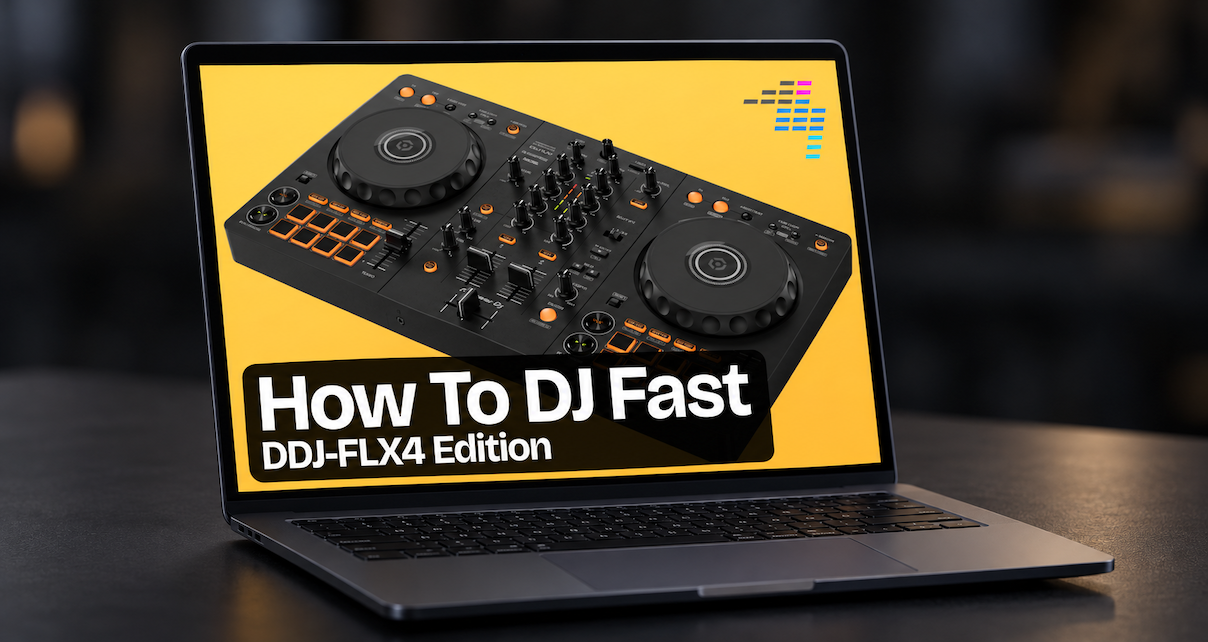
The Pioneer DJ DDJ-FLX4 is back in the beginner-DJ conversation after Digital DJ Tips launched a dedicated new course for the controller, built around 50 step-by-step video lessons. That is not just product news; it points to a bigger reality in DJ culture right now: entry-level gear has become powerful enough that beginners can learn real club habits from day one.
The FLX4 matters because it sits in a useful middle ground. It is simple enough for a first controller, but its layout echoes larger club setups, and it works with major DJ software rather than trapping you in one narrow workflow. For a new DJ, that means your practice time can build skills that transfer later.
So instead of treating the DDJ-FLX4 as a shortcut machine, use it as a training deck. Here is a practical, evergreen method for turning a beginner controller into a serious tool for cleaner mixes, smarter set arcs and better musical decision-making.
Start With Phrases, Not Just Beatmatching
The fastest way to sound less like a beginner is to stop thinking only in beats and start hearing phrases. Most dance tracks are built in blocks of 8, 16 or 32 bars. Intros, breakdowns, drops and outros usually arrive on those structural points, which means your mixes feel more natural when you line up those sections instead of randomly starting the next track.
On the DDJ-FLX4, use your cue button and waveform view as training wheels, but do not let the screen do all the listening. Count along from the first kick, notice when percussion changes, and drop a hot cue at the start of a clean intro or outro. If Track B begins its main groove exactly as Track A reaches a breakdown or outro, the transition will sound intentional even before you add effects.
A simple practice drill is to choose two house, techno or drum and bass tracks with obvious intros. Start Track B on the first beat of a 32-bar phrase in Track A, bring it in quietly, and aim to complete the transition by the next major section change. Repeat the same mix three times: once with only volume faders, once with EQ, and once with a short loop. You will quickly hear which moves serve the music and which moves are just busywork.
Use Sync As a Teacher, Then Train Your Ear
Sync is not cheating; it is a tool. The mistake is relying on it without understanding what it is doing. On a controller like the DDJ-FLX4, sync can help beginners focus on EQ, phrasing and track selection while the software handles tempo matching. That is useful, especially when you are building confidence.
But every DJ should still learn what a drifting mix sounds like. Turn sync off for part of each practice session and match two tracks manually. Use the tempo fader to get close, then nudge the jog wheel when the kicks begin to flam or blur. If the incoming track is gradually running ahead, slow it down a touch; if it is falling behind, speed it up.
The key is to move between modes deliberately. Spend ten minutes using sync to rehearse smooth transitions, then ten minutes beatmatching by ear, then return to sync and notice how much calmer your hands feel. The goal is not to prove anything to other DJs. The goal is to stay musical when the booth monitor is poor, the beatgrid is wrong or a track has a loose live-drum feel.
Build Energy Arcs Before You Touch FX
Many beginner mixes fail because every transition is treated like the most important moment of the set. Effects, filters and hot cues can be exciting, but they cannot fix a set that has no direction. Before you practise tricks, map a basic energy arc: opening groove, lift, peak, release and final statement.
For a 30-minute home set, pick around eight to ten tracks. Rank them from one to five for energy, where one is warm-up and five is peak-time. Avoid jumping from a two to a five unless you are doing it for a clear reason. A smoother arc might move 2-2-3-3-4-5-4-5, giving the listener moments to breathe before the next lift.
The DDJ-FLX4 gives you enough performance options to shape that arc without overloading it. Use filters to reduce density, EQ to swap basslines cleanly, and loops to extend a groove when the room needs more time. If a track has a huge breakdown, do not stack another huge breakdown immediately after it. Energy is not just volume; it is tension, release, rhythm, texture and timing.
Key Mixing Is a Shortcut to Smoother Transitions
Key mixing helps tracks feel connected harmonically. If two melodies clash, even a perfectly timed transition can sound messy. Software such as Rekordbox can analyse track keys, and the DDJ-FLX4 workflow makes it easy to sort or tag music by compatible keys before you play.
You do not need to become a music theory expert. Start with the Camelot wheel or your software's key display. Mix into the same key, one step around the wheel, or a relative major/minor where the mood still works. If you are playing vocal-led melodic house, UK garage or trance, this can make a dramatic difference. If you are playing raw techno or percussive club tools, key matters less than rhythm and texture, but it still helps when pads or synth stabs are prominent.
Be careful not to let key compatibility override track choice. A perfectly matched key can still create a boring transition if the grooves fight or the energy drops too hard. Think of key as a green light, not a command. The best blends happen when tempo, phrase, energy, groove and harmony all point in the same direction.
Loops, Pads and Stems Should Solve Problems
Modern beginner controllers can do far more than two-deck mixing. The FLX4 gives access to performance pads, loops, pad modes and software features that can quickly turn into a distraction. The craft is knowing when those tools solve a musical problem.
Use loops when an intro is too short, when an outro disappears before your next track is ready, or when you want to hold a groove under a vocal moment. A clean four- or eight-beat loop is usually more useful than a complicated roll. Make sure quantize is on while learning, then occasionally practise without staring at the screen so your timing improves.
Stems and acapella-style tools can be inspiring, but they expose weak preparation. Before attempting live mashups, test combinations at home. Does the vocal sit in the same key? Does the instrumental leave enough space? Does the phrasing line up, or are you forcing a hook over the wrong section? If the idea works with only volume and EQ, stems can enhance it. If it only works because you are constantly rescuing it, simplify.
Prepare a Crate Like a Working DJ
Good set prep is not about collecting thousands of tracks. It is about knowing which records do what. Create small, useful crates: warm-up rollers, vocal hooks, peak-time tools, reset tracks, closers and emergency fillers. Add comments such as 'short intro', 'big second drop', 'mix out before breakdown' or 'works after garage'. These notes become invaluable when nerves hit.
For each track, set cue points with a purpose. One cue at the first clean beat, one at the main groove, one before a breakdown, and one near the best mix-out point is often enough. Colour-code them if your software allows it. Avoid adding so many cues that the track becomes harder to read.
Finally, record every practice set. Listening back is uncomfortable, but it is the quickest route to improvement. Check whether your levels jump, whether your bass swaps are clean, whether your phrases land, and whether the energy curve actually feels like a journey. The DDJ-FLX4 may be beginner-friendly, but the habits you build on it are the same habits that make bigger club systems feel manageable later.
Keep going: plan your next set: /planner · track dance charts: /charts.
Recommended Gear & Products
See the full gear guideAffiliate links — we may earn a small commission at no extra cost to you.
- Pioneer DJ DDJ-FLX4Beginners · £249
- Pioneer DJ HDJ-X7Club booths · £139
- KRK Rokit RP5 G4Bedroom studios · £179 each
- SanDisk Ultra Fit 128GB USB 3.2CDJ / XDJ exports · £16
Buying guides: DJ controllers compared · DJ headphones compared