Scratch DJing: PlayMix Beginner Routine
By SoundStash · 2026-09-30 · 6 min read
Scratch DJing is having a useful beginner moment. A new PlayMix guide on scratch gear and technique has landed alongside a wave of DJ educator posts about structured learning, budget setups and avoiding panic-searching for tracks mid-set.
That timing matters because scratching is often treated as a flashy add-on rather than a learnable DJ craft. The truth is simpler: if you can count bars, control a fader and practise in short, focused blocks, you can add tasteful scratches to house, hip-hop, bass, garage or open-format sets without turning every transition into a battle routine.
This how-to breaks the topic down for working DJs and serious beginners: what gear actually matters, how to build your first scratch routine, where to place cuts inside a mix, and how to prepare crates so your hands are busy creating rather than hunting.
Start With Scratch-Ready Gear, Not Expensive Gear
The most important scratch DJing choice is not whether your setup looks professional on camera. It is whether the platter, fader and signal chain respond quickly enough for repeated hand movement. A scratch-friendly setup should let you stop, push, drag and release sound without the deck feeling sluggish or the fader smearing every cut.
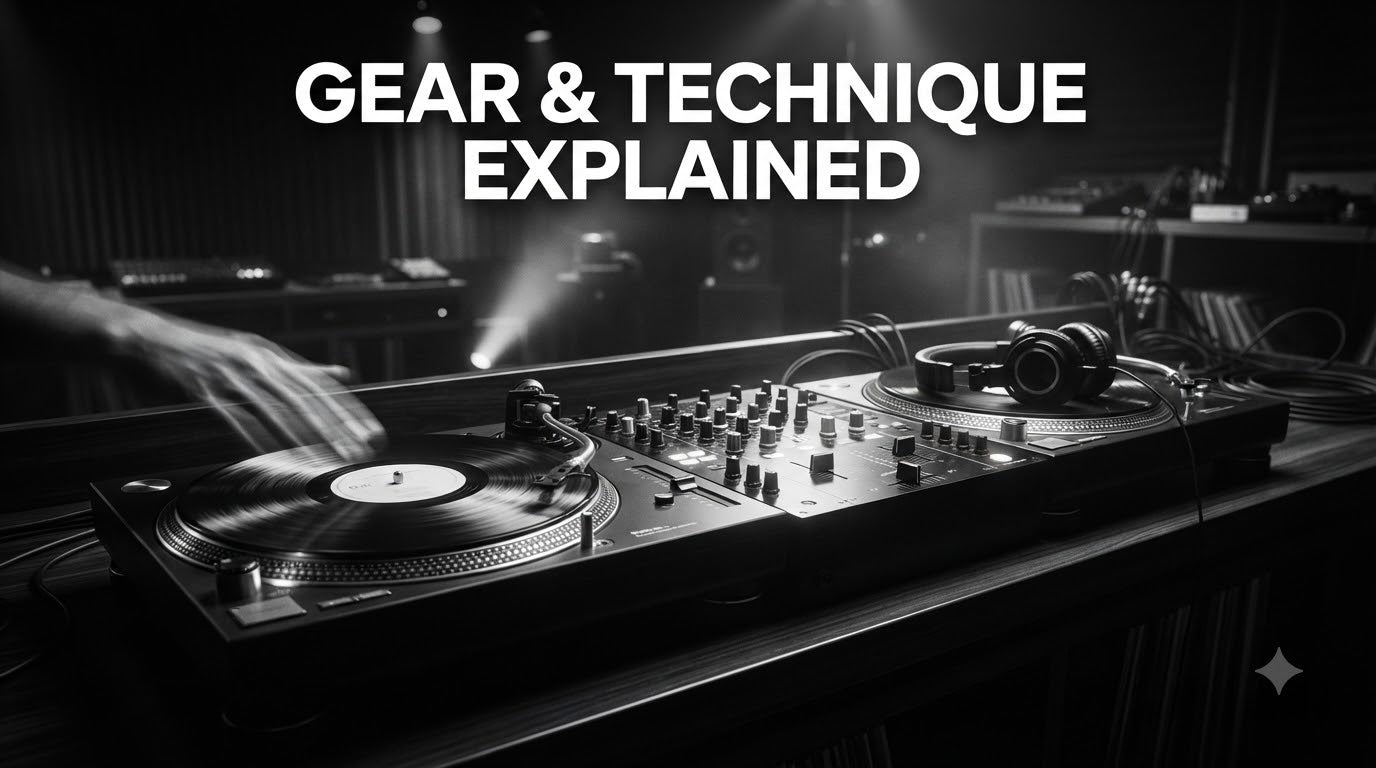
For vinyl, that usually means a direct-drive turntable with solid torque, a cartridge that tracks confidently, and a mixer with a sharp crossfader curve. For controller users, a battle-style controller or motorised platter unit can work well, but only if the jog response and fader tension feel predictable. If the sound arrives late or the fader cannot close cleanly, your timing will suffer even when your hands are doing the right thing.
Beginners should avoid the trap of upgrading too early. A basic controller with a decent fader can teach timing, phrasing and hand discipline. Once your baby scratches, chirps and simple transforms are consistent at slow tempos, you will know exactly what limitation you are trying to solve with better gear.
Build a 15-Minute Daily Scratch Routine
Scratch progress comes from repetition, not marathon sessions. A focused 15-minute routine is enough to build muscle memory if you repeat it most days. Start with five minutes of record control: baby scratches on a single sound, moving forward and back evenly while counting one, two, three, four. Do not touch the crossfader yet. The goal is to make the sound land in time.
Use the next five minutes for fader work. Keep the same sound, but practise clean opens and closes on quarter notes, then eighth notes. Listen for gaps that are intentional rather than accidental. If every cut sounds rushed, lower the BPM. Good scratch timing at 80 BPM will transfer better than messy timing at 130 BPM.
Use the final five minutes to make it musical. Try one bar of scratching, then one bar of silence, then two bars of scratching, then two bars of the original groove. This teaches restraint, which is the difference between a scratch that lifts a transition and a scratch that hijacks the set.
Place Scratches Where the Mix Has Space
The easiest way to make scratching sound amateur is to put it over a busy vocal, a full drum fill or the biggest hook in the track. Scratches work best when the arrangement leaves a gap: an intro with drums only, a stripped breakdown, the last four bars before a drop, or a percussion loop that needs a human accent.
Think of scratches as punctuation. A short cut before a bassline enters can create anticipation. A two-beat answer to a vocal phrase can add personality. A quick baby scratch over the outgoing track can make a blend feel intentional instead of mechanical. You do not need a long routine to make the crowd notice; you need the right sound in the right pocket.
If you play four-to-the-floor music, practise over 16-bar phrases. Let the incoming track establish its kick and groove, add a small scratch phrase near bar 13, then complete the transition on bar 17. That keeps the musical structure intact while giving your mix a signature moment.
Prepare a Scratch Crate Before Peak Time
Recent DJ advice circulating online has highlighted a very real club problem: peak-time is the worst moment to start digging aimlessly. Scratch DJs need preparation even more than blend-only DJs because the sound source matters. Not every vocal stab, snare, horn hit or acapella syllable will cut through a system cleanly.
Create a dedicated scratch crate with no more than 30 sounds at first. Include a few classic ahh and fresh-style samples, short vocal hits, drum one-shots, instrumental loops and acapella phrases in keys you actually play. Add cue points at the exact transient so the sound starts immediately when you move the platter or jog wheel.
Then label the energy use, not just the title. Tags such as intro scratch, breakdown fill, pre-drop stab, hip-hop tool or house-safe vocal are more useful under pressure than vague genre folders. The aim is to remove decision fatigue so your creativity stays on the decks, not in the browser.
Use Acapellas and Instrumentals Without Clashing
Acapella-over-instrumental routines are a natural bridge between basic mixing and turntablism. They let you practise timing, phrasing and fader control while still sounding like a DJ set rather than a technical drill. The key is to treat the acapella as a lead instrument with its own rhythm and key centre.
Before performing, test the vocal against the instrumental at home. Check three things: whether the downbeat lines up, whether the vocal key feels compatible, and whether the instrumental leaves enough midrange room. If the vocal fights the synth lead or bassline, use EQ to carve space or choose a sparser section.
For scratch use, isolate tiny vocal fragments instead of trying to cut a whole line. One syllable can become a rhythmic hook. Two words can become a call-and-response. This is also safer in a live mix because short phrases recover quickly if your timing slips.
Record Your Scratches Like a DJ, Not a Drummer
A scratch can be technically correct and still feel wrong inside a DJ set. Recording your practice is the fastest way to hear whether your cuts support the groove. Do not only record isolated drills; record full transitions with the scratch included, then listen back without touching the decks.
Ask practical questions. Did the scratch enter on a phrase that made sense? Was it louder than the vocal or lead synth? Did it add tension before the next track, or did it interrupt the dancefloor’s momentum? This kind of review turns scratching from a trick into arrangement awareness.
Once you find a phrase that works, save it as part of your set prep. Note the two tracks, the cue point, the bar count and the scratch sound. Over time, you will build a small library of reliable moments that can be adapted rather than repeated exactly.
Keep going: Plan your DJ practice: /planner · Track dance trends: /charts.
Recommended Gear & Products
See the full gear guideAffiliate links — we may earn a small commission at no extra cost to you.
- Pioneer DJ DDJ-FLX4Beginners · £249
- Pioneer DJ HDJ-X7Club booths · £139
- KRK Rokit RP5 G4Bedroom studios · £179 each
- SanDisk Ultra Fit 128GB USB 3.2CDJ / XDJ exports · £16
Buying guides: DJ controllers compared · DJ headphones compared