VirtualDJ 2026 DJ Drops: ShoutOut Guide
By SoundStash · 2026-10-21 · 6 min read
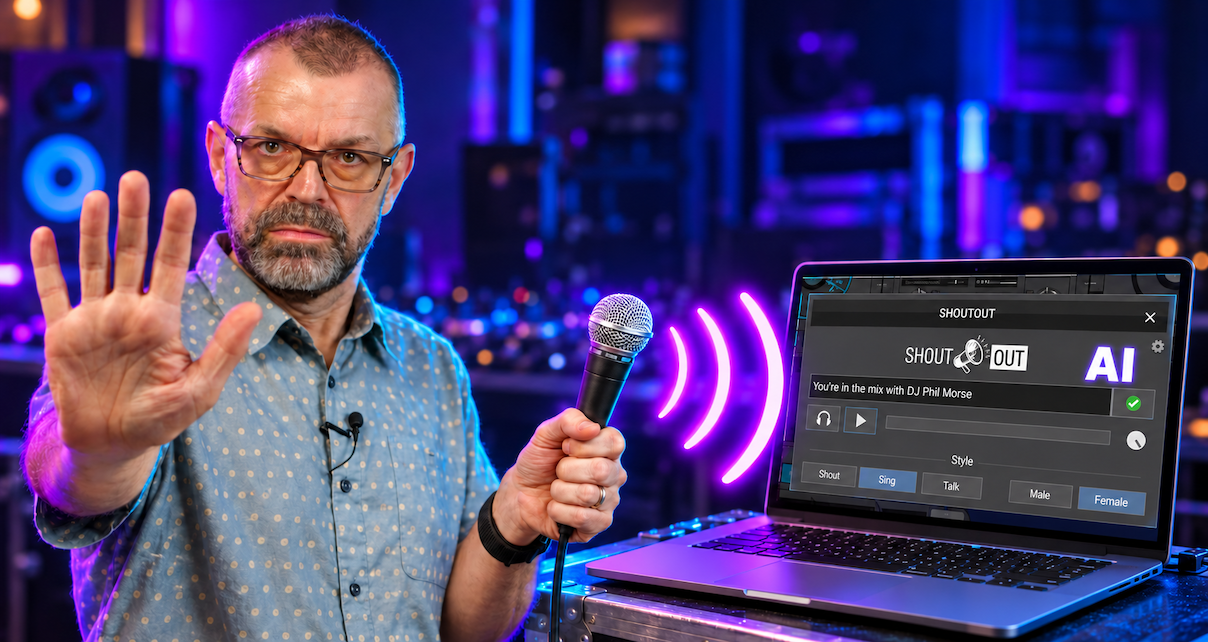
VirtualDJ 2026 has put a fresh spotlight on a very old DJ problem: how do you speak to the room without stepping on the record? Its new ShoutOut feature can generate spoken drops from typed text, with options for different delivery styles and a stem-based mode that can place the message where a vocal would normally sit.
That is clever, but it also raises the craft question. A drop is not automatically exciting just because it is instant. Used badly, it can make a clean blend feel like a radio advert; used well, it can mark a transition, reset attention, brand a livestream or guide a venue through the night.
This guide treats VirtualDJ 2026 as the news hook, but the technique applies to Serato, rekordbox, Engine DJ, samplers and hardware controllers too. The goal is simple: make DJ drops feel like part of the arrangement, not an interruption.
Start With Function, Not Novelty
Before generating any DJ drop, decide what job it has. Is it an identity tag, a transition cue, a venue announcement, a hype moment, or a practical message such as last call? Each one should be written differently. A brand tag can be short and repeatable; a practical announcement needs clarity; a hype drop needs timing more than poetry.
A useful rule is to keep performance drops under four seconds unless they serve a specific venue purpose. The longer the phrase, the more musical space it steals. Try writing three versions of the same idea: one word, one short phrase and one full sentence. In a club mix, the shortest version usually wins.
VirtualDJ's ShoutOut concept makes it tempting to type something on the fly. That can be useful for livestreams or mobile gigs, but your best drops should still be prepared, gain-staged and tested like any other sample. Treat the AI voice as a source, not as the final performance.
Place Drops Where the Arrangement Makes Room
The safest places for DJ drops are breakdowns, drum-only intros, outro loops, filtered transitions and the final bar before a drop. These moments already have reduced harmonic or vocal information, so a spoken phrase can sit clearly without masking a lead line. If the track is in a busy chorus, the drop will fight for attention even if the technology is smart.
Count in phrases, not just beats. In most dance music, eight-bar and sixteen-bar sections are your landmarks. Fire the drop at the start of a phrase, then let it finish before the next major musical event. A two-second tag on bar one of a breakdown usually feels intentional; the same tag halfway through a vocal hook can feel random.
If you are using a stem-swap style feature, still listen like a DJ. Removing a vocal creates space, but it can also expose reverb tails, backing vocals or melodic gaps. Preview in headphones and ask whether the track still feels emotionally intact. The aim is not to prove the software can do it; the aim is to keep the dancefloor locked.
Match Energy, Tone and Genre
Not every room wants the same voice. A peak-time bass set might handle an aggressive shout; a deep house warm-up may call for a calm spoken tag or none at all. Think of a drop as another layer in your arrangement. Its tone should match the lighting, crowd density and energy arc of the set.
For warm-up sets, use drops sparingly and avoid anything that announces peak-time intensity too early. A subtle station-ID style phrase can work during a slow filter mix, but big festival-style shouting can make the DJ sound disconnected from the room. During peak moments, the opposite may be true: a sharp, high-energy tag before a known chorus can amplify recognition.
Also consider genre density. Drum and bass, hyperpop and hard techno often have less empty space than disco edits or minimal house, so your window is shorter. If the mix is already rhythmically intense, use one-word tags, reverse swells or heavily filtered versions rather than full spoken sentences.
Gain-Stage Your Drops Like Music
The most common mistake with DJ drops is level. If the drop is louder than the master, it shocks the listener. If it is too quiet, it sounds amateur and encourages you to overuse it. Start by setting drops a little below your main track level, then use EQ and compression to help them cut through without brute volume.
Roll off low frequencies below roughly 120 Hz on spoken drops. Voice does not need sub-bass in a club system, and unnecessary low end can cloud the kick. A small presence boost around the upper mids can improve intelligibility, but avoid harshness. If your drop hurts in headphones, it will be worse on a bright PA.
Save different versions for different contexts. A dry drop may work on a livestream, while a club version might need a short delay or reverb tail so it blends into the room. Keep the effect subtle. The drop should sound attached to the mix, not pasted over it.
Build a Drop Crate for Set Prep
Instead of generating drops only during performance, create a small drop crate during set prep. Organise it by purpose: identity tags, crowd prompts, venue messages, transition tools and emergency announcements. Colour-code or label them clearly so you are not reading filenames when the next mix needs attention.
Map your most useful drops to sampler pads, but resist filling every pad bank. Four reliable drops are more powerful than twenty gimmicks. Put the cleanest identity tag on pad one, a low-energy spoken tag on pad two, a peak-time hype version on pad three and a practical announcement on pad four.
This approach also works alongside recent DJ workflow trends, from dynamic beatgrid fixes in rekordbox and Serato to broader library access in modern software ecosystems. The common thread is preparation. Technology can solve friction, but only a prepared DJ turns the feature into a musical decision.
Use AI Drops Without Losing Crowd Trust
AI-generated voice tools are powerful, so use them transparently and tastefully. Avoid impersonating real artists, MCs or public figures, and do not create fake endorsements. A crowd may forgive a cheesy tag; they are less forgiving when something feels misleading or exploitative.
There is also a pacing issue. If every transition has a voice tag, none of them feel special. Try limiting branded drops to major set moments: the opening identity, the first big lift, a genre switch, a recording marker and the closing section. Silence is still one of the best tools a DJ has.
The best test is simple: record a 20-minute practice mix and listen back the next day. If the drops make the set easier to follow and more memorable, keep them. If they pull you out of the music, rewrite, shorten or delete. Good DJ craft is knowing what not to trigger.
Keep going: plan your next set: /planner · track current dance trends: /charts.
Recommended Gear & Products
See the full gear guideAffiliate links — we may earn a small commission at no extra cost to you.
- Pioneer DJ DDJ-FLX4Beginners · £249
- Pioneer DJ HDJ-X7Club booths · £139
- KRK Rokit RP5 G4Bedroom studios · £179 each
- SanDisk Ultra Fit 128GB USB 3.2CDJ / XDJ exports · £16
Buying guides: DJ controllers compared · DJ headphones compared